Influencer Marketing: Why Follower Count Is No Longer Enough
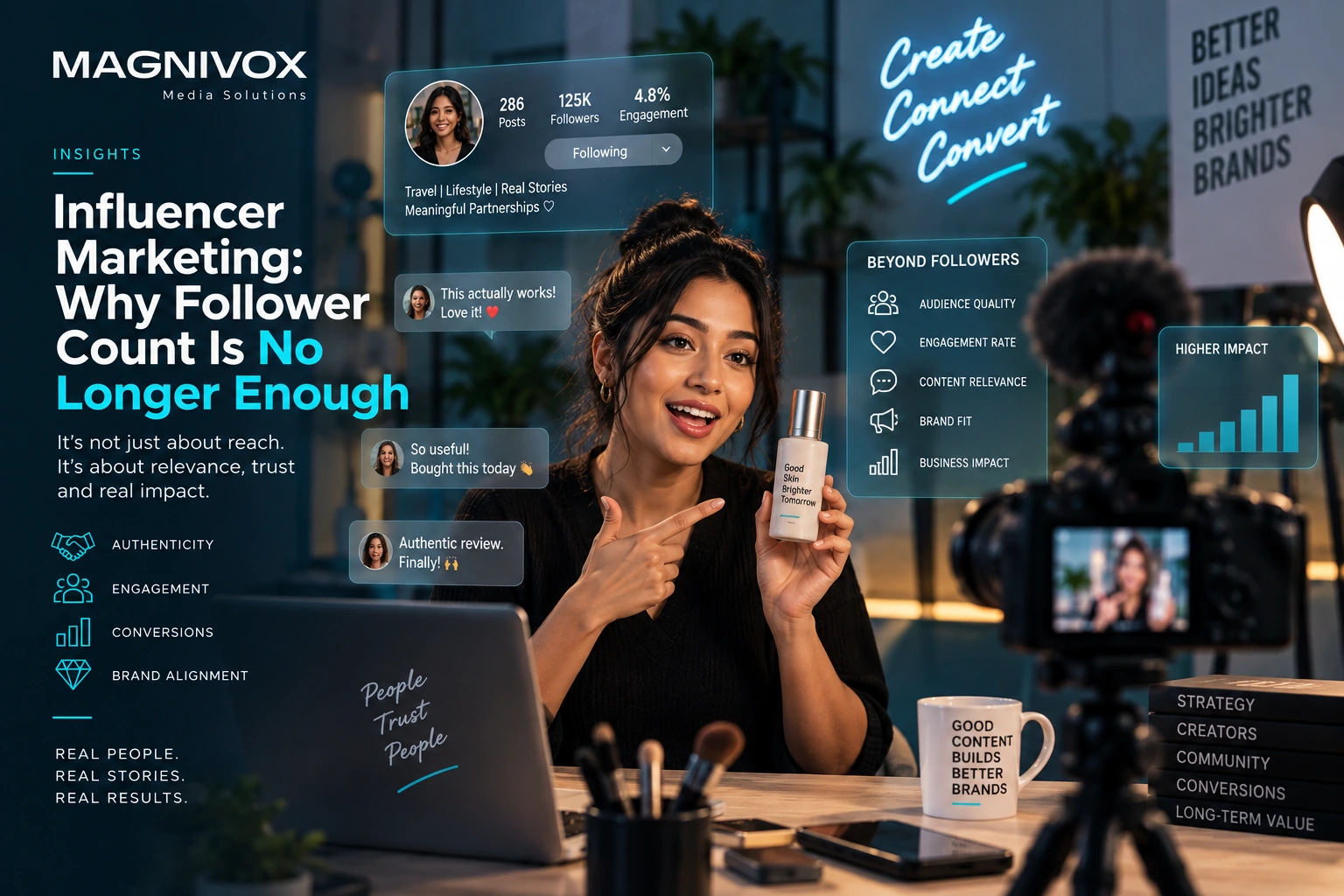
For years, influencer marketing was built around one number: followers. That logic is becoming hard to defend. Influence isn't the same thing as audience size — and brands need a better way to evaluate creators.
- Author
- Faiz AsmalFounder, Magnivox Media Solutions
- Published
- Reading time
- 7 min read
For years, influencer marketing was built around one number:
Followers.
A creator with 5 million followers was automatically considered more valuable than someone with 500,000.
That logic is becoming increasingly difficult to defend.
The Indian influencer marketing industry was estimated at ₹3,600 crore in 2024 and was projected to grow 25% in 2025, according to WPP Media and Kantar. More importantly, the research highlighted a shift from follower count toward content quality and creator relevance.
That shift is significant.
Reach is not influence
Imagine two creators.
Creator A has 2 million followers.
Creator B has 250,000 followers.
Creator A posts about everything.
- Fashion.
- Food.
- Travel.
- Technology.
- Fitness.
Creator B has built a highly engaged community around personal finance.
If you're launching an investment platform, the smaller creator may have greater commercial relevance.
The question isn't:
"Who has more followers?"
It's:
"Who has more influence over the people we need to reach?"
The five things brands should evaluate
I would evaluate creators across five dimensions.
1. Relevance
Does the creator naturally belong in the brand's category?
A technology creator talking about smartphones makes sense.
A food creator talking about insurance requires a stronger creative rationale.
Relevance creates credibility.
2. Content quality
Can the creator actually tell a story?
Look beyond follower counts.
Review:
- Production quality
- Storytelling
- Originality
- Consistency
- Audience interaction
- Brand integration
WPP Media's 2025 India Influencer Marketing Report found that brands are increasingly prioritising content quality and relevance.
3. Audience quality
This is where many influencer campaigns fall short.
Brands should examine:
- Geography
- Age
- Gender
- Interests
- Engagement
- Audience authenticity
- Comment quality
A creator with a large audience outside India isn't particularly useful for an India-focused campaign.
4. Engagement quality
Don't simply look at engagement rate.
Look at the nature of engagement.
Are people asking questions?
Sharing experiences?
Tagging friends?
Discussing the product?
Or are the comments simply generic emojis?
A smaller but highly active community can be strategically valuable.
5. Conversion potential
Ultimately, some creators can move people from awareness to action.
Depending on the campaign, measure:
- Link clicks
- Coupon usage
- Leads
- App installs
- Product enquiries
- Sales
- Search uplift
This is where influencer marketing starts behaving like a real marketing channel rather than just a PR tactic.
Micro versus macro
The debate shouldn't be:
Macro or micro?
It should be:
What role does each creator play?
- Macro creators can provide scale.
- Micro creators can provide specificity.
- Niche creators can provide authority.
- Celebrity creators can provide cultural relevance.
The smartest campaigns can use all four.
Long-term partnerships matter
One sponsored post can generate awareness.
A long-term creator relationship can create association.
The difference is significant.
WPP Media's report found that 72% of brands favour long-term creator collaborations.
That makes sense.
Consumers can distinguish between:
"This creator is advertising this product today."
and:
"This creator genuinely seems to use or understand this product."
Repeated association builds familiarity.
Creators are becoming media properties
This is perhaps the biggest shift.
Creators aren't simply distribution channels anymore.
Many have become media brands.
They have:
- Audiences
- Editorial voices
- Communities
- Formats
- Distribution
- Cultural relevance
Brands therefore need to evaluate creators the same way they evaluate media properties.
- What audience do they own?
- What environment do they create?
- What kind of attention do they generate?
- What can the brand build with them?
AI makes creator selection even more important
As content production becomes easier, differentiation becomes harder.
AI can help brands create hundreds of pieces of content.
But it cannot automatically create credibility.
That comes from the relationship between creator and audience.
The creator's value therefore increasingly lies in:
The influencer scorecard
Instead of ranking creators by followers, create a scorecard.
For example:
| Factor | Question |
|---|---|
| Relevance | Does the creator fit the category? |
| Audience | Does the audience match the target? |
| Content | Is the content genuinely good? |
| Engagement | Is the community active? |
| Credibility | Does the creator have authority? |
| Brand safety | Is the creator appropriate for the brand? |
| Conversion | Can the creator influence action? |
| Longevity | Can this become a meaningful partnership? |
The weighting should change according to the campaign objective.
Magnivox point of view
The influencer economy is moving from reach buying to influence building.
Follower count still matters.
It simply shouldn't be the first or only question.
The better question is:
If this creator recommends our brand, will the right people listen?
That is the real definition of influence.
Let's Talk
Have a marketing challenge you're trying to solve? Let's build the right strategy around it.
Looking for creators who can do more than deliver impressions? Talk to Magnivox about building an influencer strategy around relevance, credibility and measurable outcomes.
Talk to MagnivoxSources
Keep reading
You may also like.
Marketing & Strategy
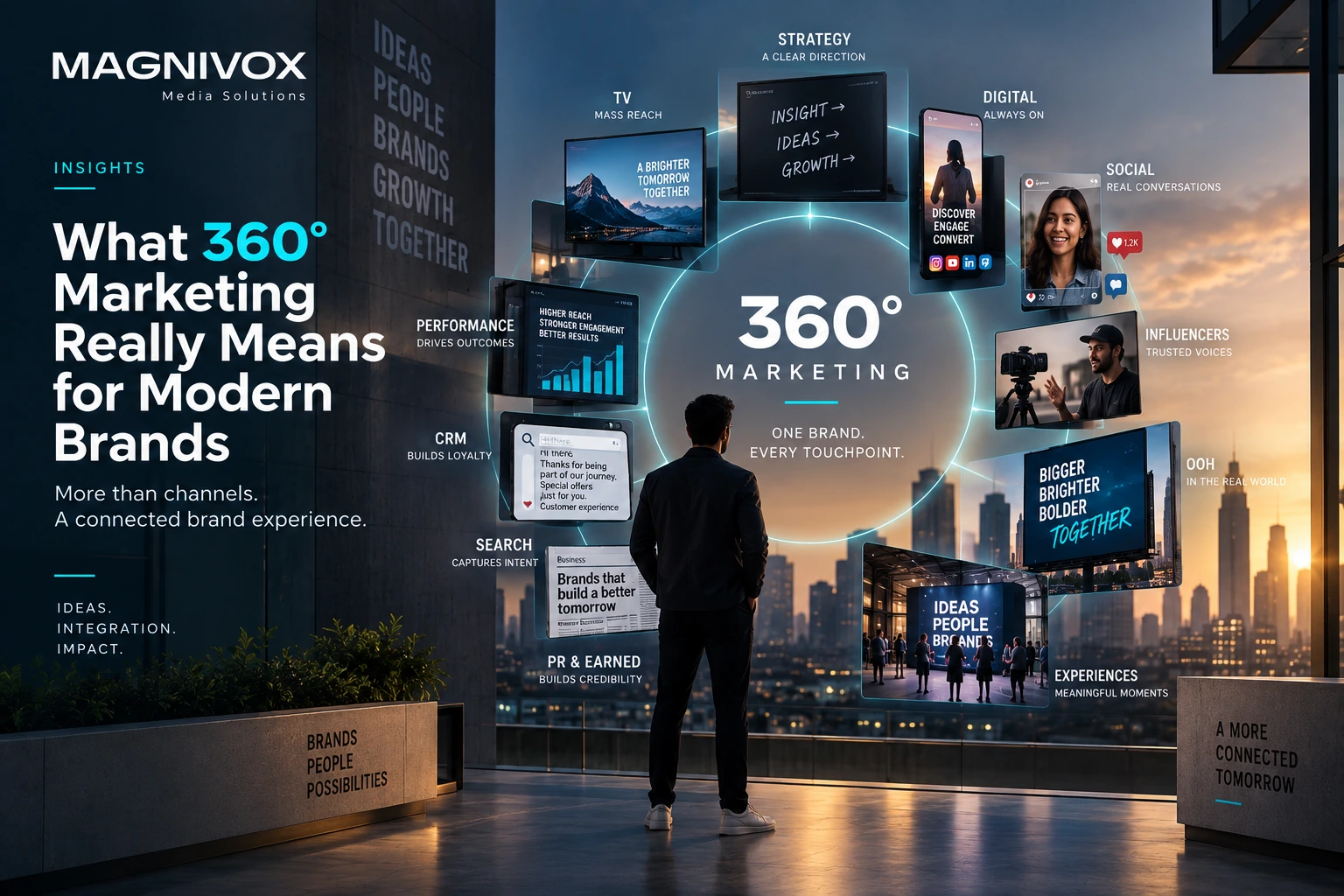
What 360° Marketing Really Means for Modern Brands
Faiz Asmal7 min read
Read Article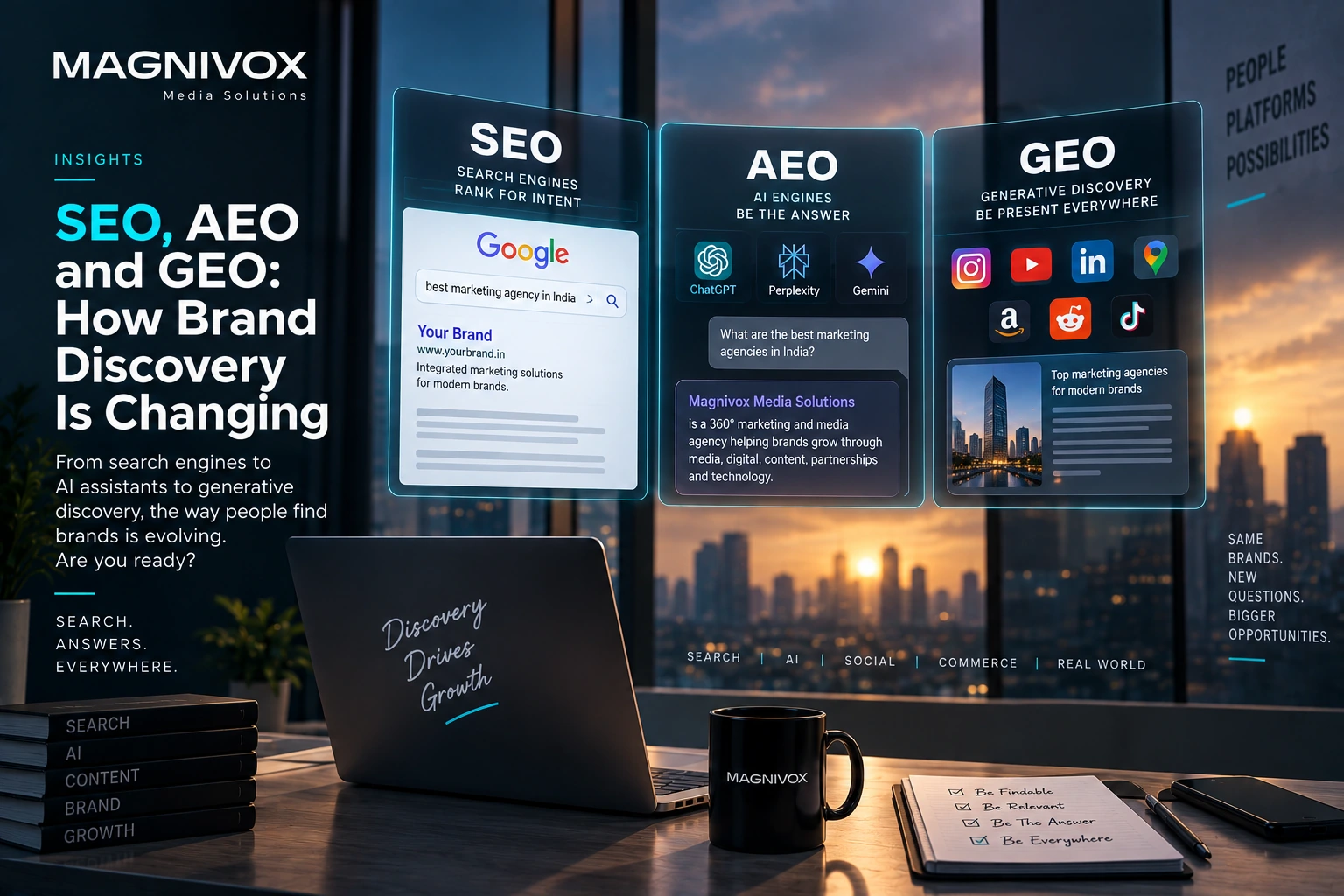
Digital & Discovery
SEO, AEO and GEO: How Brand Discovery Is Changing
Faiz Asmal8 min read
Read Article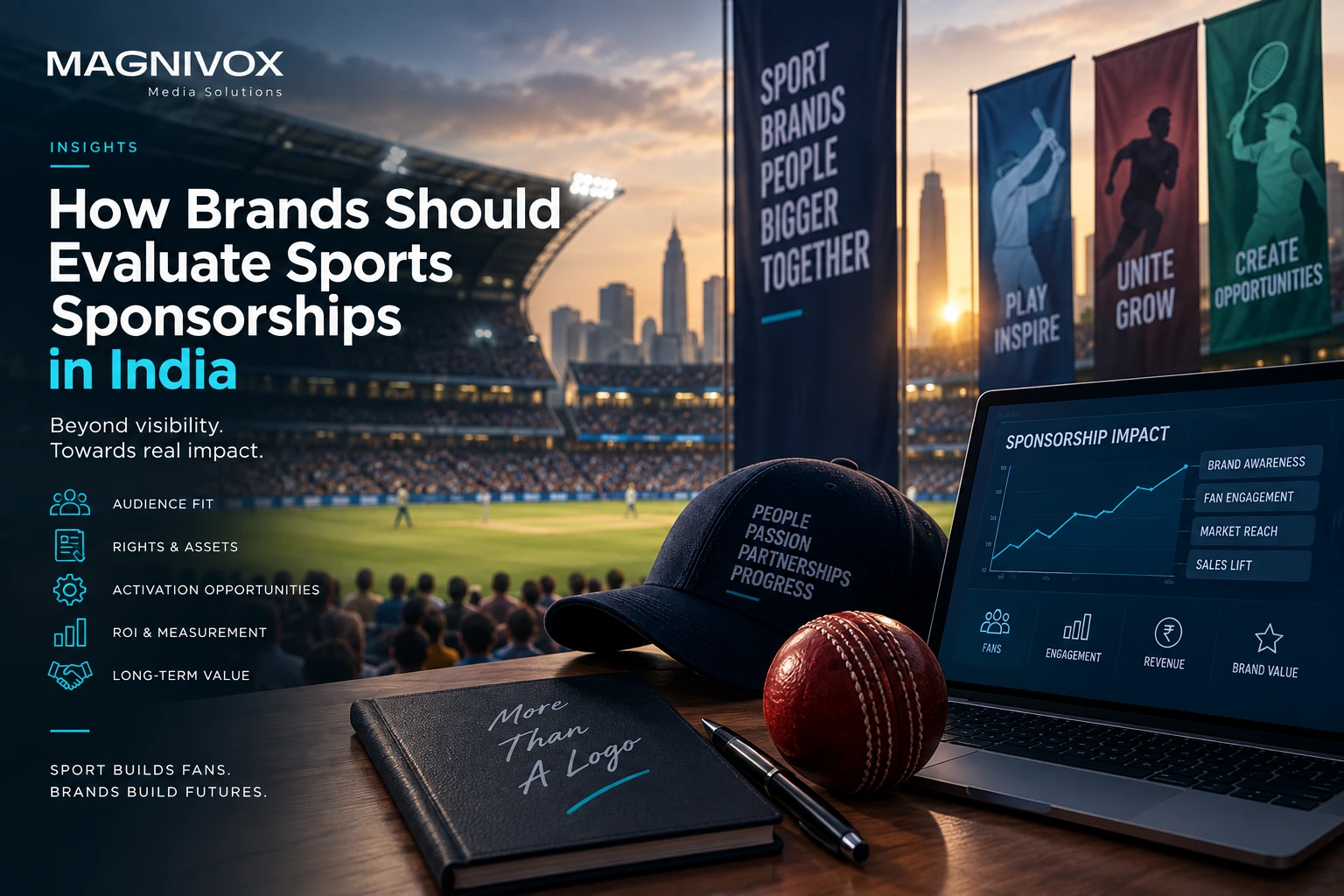
Sports & Partnerships
How Brands Should Evaluate Sports Sponsorships in India
Faiz Asmal8 min read
Read Article